
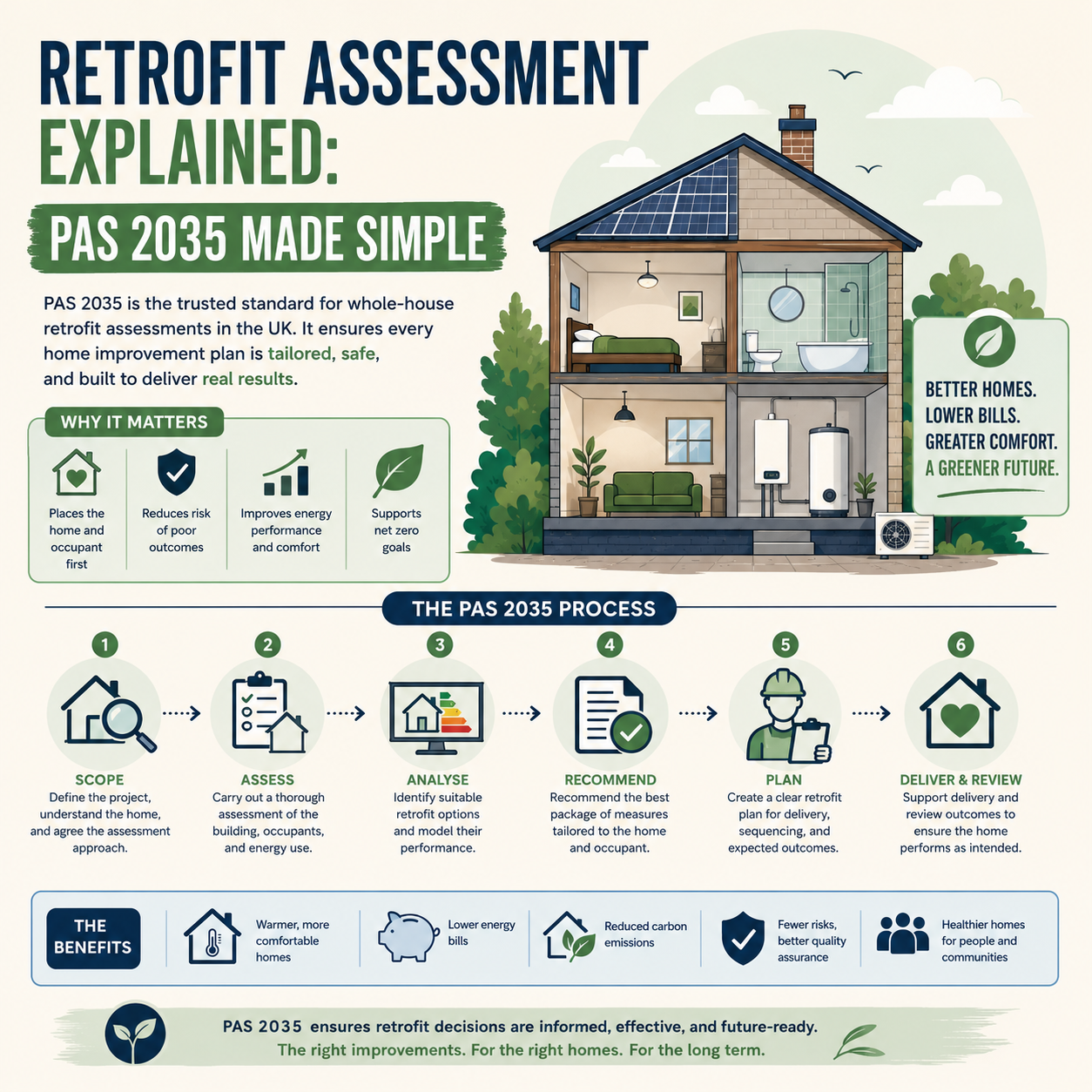
Retrofit assessments are becoming increasingly important across the UK as homeowners and landlords search for ways to improve energy efficiency, reduce heating bills and meet modern sustainability standards.
PAS 2035 was introduced to improve the quality of retrofit projects and reduce problems caused by poorly planned energy upgrades.
What Is PAS 2035?
PAS 2035 is a government-backed framework designed to ensure energy efficiency improvements are carried out using a whole-house approach.
Instead of installing isolated measures without planning, PAS 2035 evaluates how different upgrades interact together.
A retrofit assessment considers:• Property age• Construction type• Ventilation• Insulation• Heating systems• Occupancy patterns
Why Retrofit Assessments Matter
Poorly planned retrofit work can create serious issues including:• Damp problems• Condensation• Poor ventilation• Heat loss• Inefficient installations
A professional retrofit assessment helps identify suitable improvements while reducing risks.
Common Retrofit Measures
Recommendations may include:• Loft insulation• Cavity wall insulation• Solar PV systems• Air source heat pumps• Ventilation upgrades
Many ECO4-funded projects now require PAS 2035 compliance before installation work can begin.
Benefits of Retrofit Planning
Professional assessments help:• Improve EPC ratings• Lower heating costs• Increase comfort• Reduce carbon emissions• Improve long-term property performance
Retrofit assessments are an essential step toward creating safer, healthier and more energy-efficient homes.