
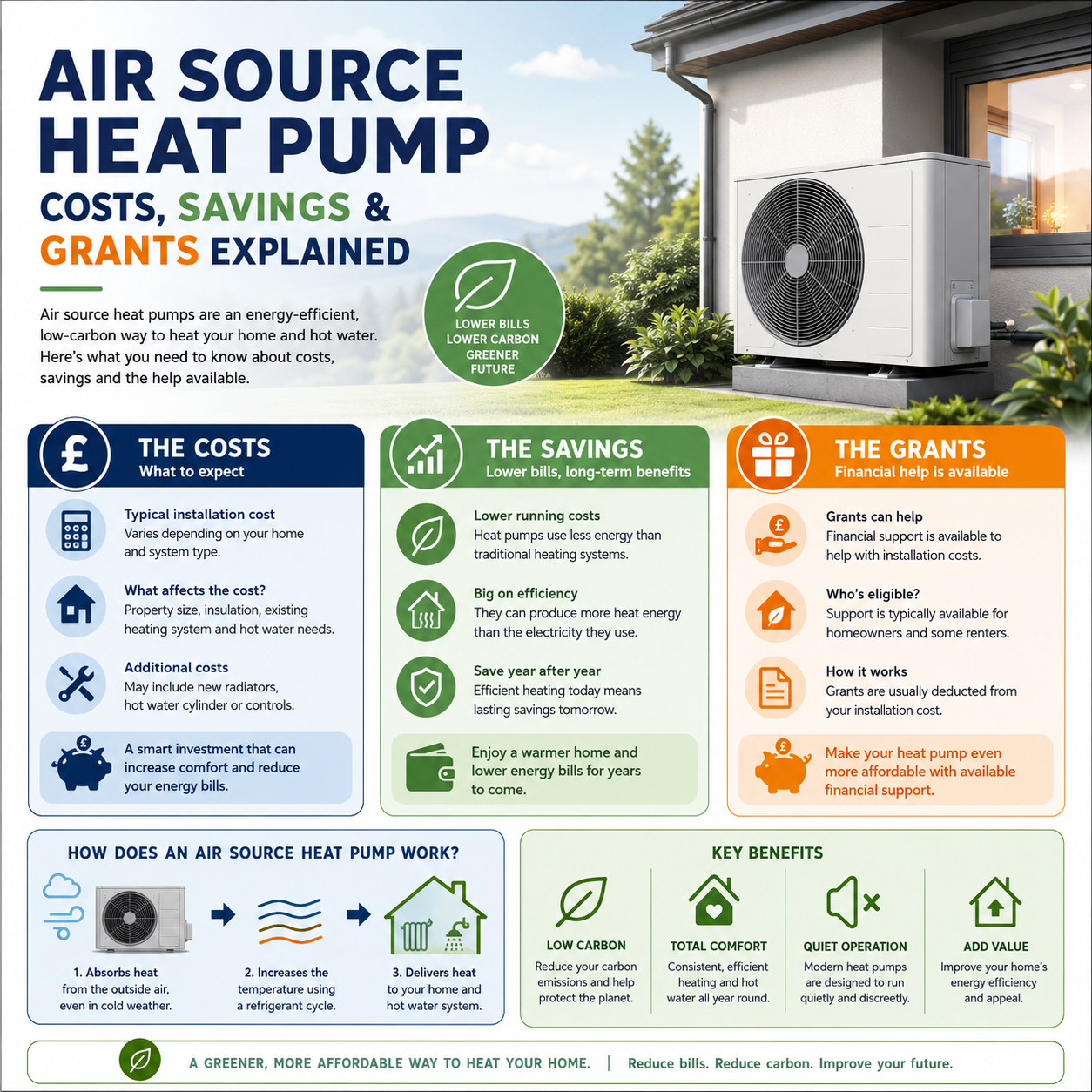
Air source heat pumps are rapidly becoming one of the most popular renewable heating solutions across the UK. As energy prices continue to rise and homeowners search for greener alternatives to traditional gas boilers, heat pumps are gaining significant attention for their efficiency, long-term savings and environmental benefits.
An air source heat pump works by extracting heat from the outside air and transferring it into your property to provide heating and hot water. Even during colder weather, modern systems can efficiently capture thermal energy from the air and convert it into usable heat.
Why Homeowners Are Switching to Heat Pumps
Many UK homeowners are choosing air source heat pumps because they offer:• Lower carbon emissions• Reduced energy bills• Improved energy efficiency• Long system lifespan• Reduced reliance on fossil fuels
As the UK government continues pushing toward net zero targets, renewable heating technologies are expected to become increasingly important.
How Much Does an Air Source Heat Pump Cost?
The total installation cost depends on several factors including:• Property size• Existing heating system• Insulation levels• Pipework requirements• Radiator upgrades• Hot water cylinder installation
Larger homes may require more powerful systems while poorly insulated properties often need additional efficiency upgrades before installation.
Government Grants and Financial Support
The UK government currently offers support through the Boiler Upgrade Scheme. This grant helps reduce upfront installation costs and encourages homeowners to move away from traditional gas heating systems.
Government support can significantly reduce the financial barrier for homeowners considering renewable heating upgrades.
Do Heat Pumps Save Money?
Heat pumps are designed to operate efficiently over long periods. When installed correctly in well-insulated homes, they can help reduce heating costs compared to older inefficient boiler systems.
The biggest savings are often achieved when combined with:• Loft insulation• Cavity wall insulation• Smart heating controls• Solar PV systems
These improvements help reduce heat loss and improve the overall efficiency of the property.
Are Heat Pumps Suitable for Every Home?
While many UK properties are suitable for heat pumps, every home is different. Factors such as insulation quality, available outdoor space and heating demand all influence system suitability.
A professional survey is essential before installation to ensure the property can achieve efficient performance.
Environmental Benefits
Air source heat pumps help reduce carbon emissions by using renewable energy from the surrounding air. This makes them a more environmentally friendly option compared to gas boilers.
As the electricity grid becomes greener through renewable energy generation, heat pumps are expected to become even more sustainable over time.
Choosing the Right Installer
Selecting an experienced installer is important for ensuring:• Correct system sizing• Proper installation• Efficient operation• Long-term reliability
Poorly installed systems may fail to deliver expected savings and comfort levels.
Conclusion
Air source heat pumps represent one of the most promising renewable heating technologies available to UK homeowners today. With government grants, rising energy awareness and improved technology, more households are considering heat pumps as part of their long-term energy strategy.
Arranging a professional assessment is the best way to determine whether an air source heat pump is suitable for your property.